
The Orlando oak problem
Thousands of Orlando-area homes — from Winter Garden to Oviedo — have 1990s honey-oak kitchens. Solid wood. Great bones. A color nobody would pick today. They are the best candidates for painting.
Grain filling is the difference
Oak grain is deep. Paint alone sinks into it and leaves a pebbled texture. We apply grain filler, sand it back, and repeat until the surface is flat. Only then do we prime and spray. It adds time. It is the whole reason the finish looks new instead of "painted oak."
See can stained cabinets be painted for more on prep for stained wood.
What changes
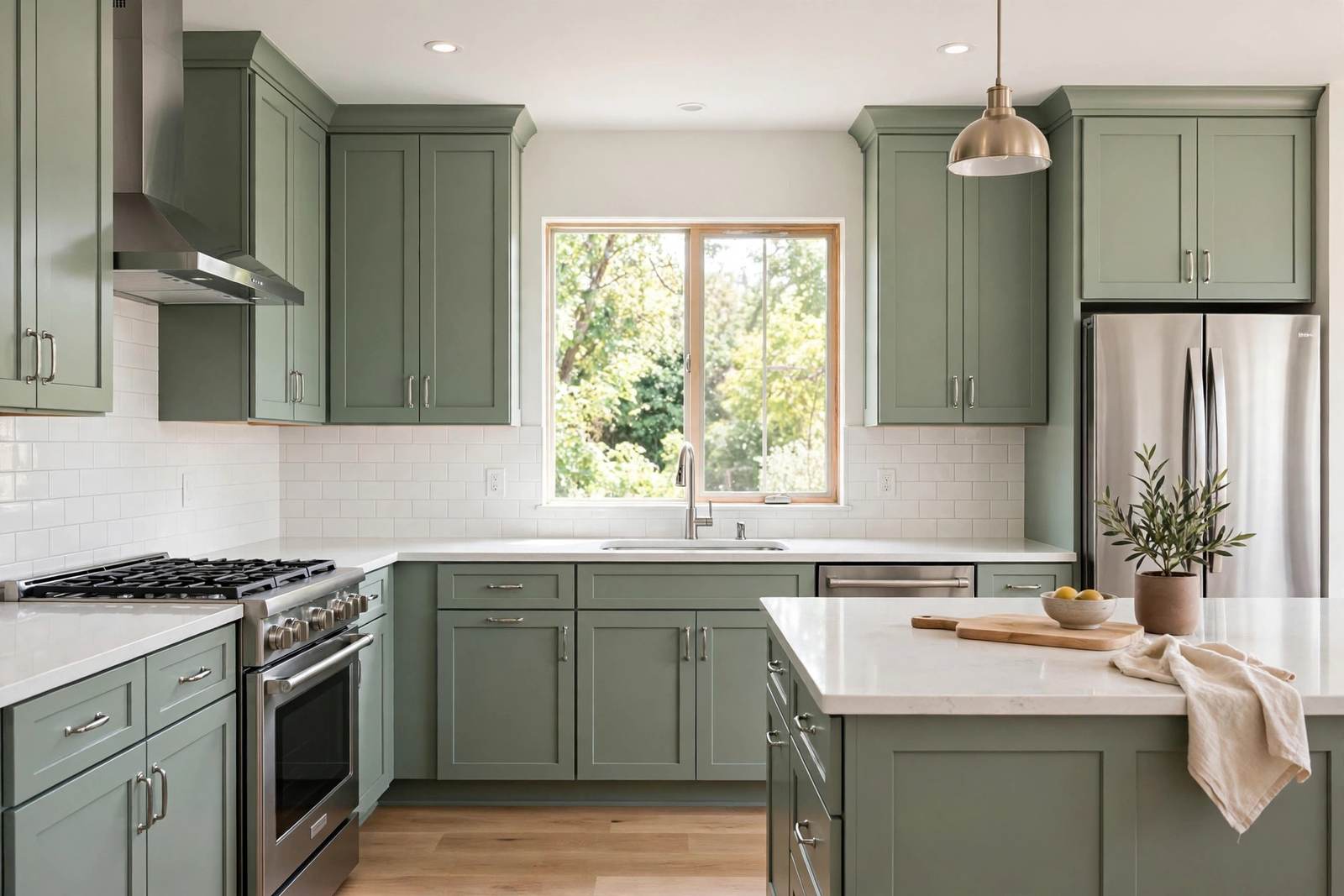
Color transforms the kitchen. Grain fill transforms the cabinets. The result is smooth and modern. The oak becomes a backdrop instead of the loudest thing in the room.
Call (301) 679-9193 for a free visit and written price.
Our process for oak
Oak gets everything a normal kitchen gets, plus the grain work.
- Look and price. We check the oak species and grain depth. Red oak is deeper than white oak. Written price includes the grain fill.
- Degrease twice. Oak holds grease in its grain. We clean until the rinse runs clear.
- Doors off to the shop. Labeled, hardware removed, ready for filling.
- First fill. Grain filler is worked into the pores across the grain, then sanded back when dry.
- Second fill. Deep grain needs two passes. We check with raking light — any pore still showing gets filled again.
- Sand smooth. The surface should feel like maple before primer goes on.
- Prime. A high-build bonding primer locks the fill and gives the topcoat a uniform base.
- Spray two coats. Flat, even, no texture telegraphing through.
- Cure and rehang. Full cure before doors go back up.
Why grain filling cannot be skipped
Oak pores are deep. Paint is thin. Without filler, the paint sinks into the pores and the surface dries with a pebbled texture. It looks like painted oak, not new cabinets.
Filler is a thick paste worked into the grain, then sanded flat. It takes two passes on most Orlando red oak. It is dusty, slow work. It is also the entire difference between a good oak job and a bad one.
Ask any bidder: "Do you fill the grain, and how many passes?" A vague answer means they do not.
Red oak vs. white oak
Most Orlando 90s kitchens are red oak. Deeper grain, pinker tone. Needs two fill passes. White oak is tighter-grained and fills faster, but it is less common here.
Both paint beautifully once filled. The species changes the labor, not the result.
What oak becomes
Smooth. That is the transformation. The heavy 90s look was half color, half texture. Fill the grain and the cabinets read as modern flat-panel, even though the door style did not change.
Color-wise, oak takes anything. Whites are the classic rescue. Greiges warm it up. Dark greens and navy make it dramatic. See cabinet colors.
New hardware completes it. The old hinges and knobs were part of the dated look. Fresh pulls on smooth painted oak look like a new kitchen.
How long an oak kitchen takes
A day longer than a non-oak kitchen, usually. The fill-and-sand cycles add up. Most oak kitchens run four to six working days. We would rather take the day than ship texture.
After the paint: styling smooth oak cabinets
Smooth painted oak is a blank canvas. A few choices make it sing.
Hardware first. The old hinges and knobs belonged to the oak era. New pulls in matte black or brushed brass complete the transformation. See hardware upgrades.
Then the walls. Fresh cabinet paint makes tired wall paint obvious. A soft white or warm greige on the walls lets the cabinets lead.
Lighting helps. Under-cabinet lights turn painted cabinets into a feature at night. They are cheap to add while the kitchen is already a work zone.
Finally, clear the counters. Smooth new cabinets look best with breathing room. A few styled pieces beat a crowded counter every time.
None of this is required. But paint plus these touches reads as a full renovation for a fraction of the price.
Related services & guides
More on this topic from Orlando Cabinet Painting Pros: